

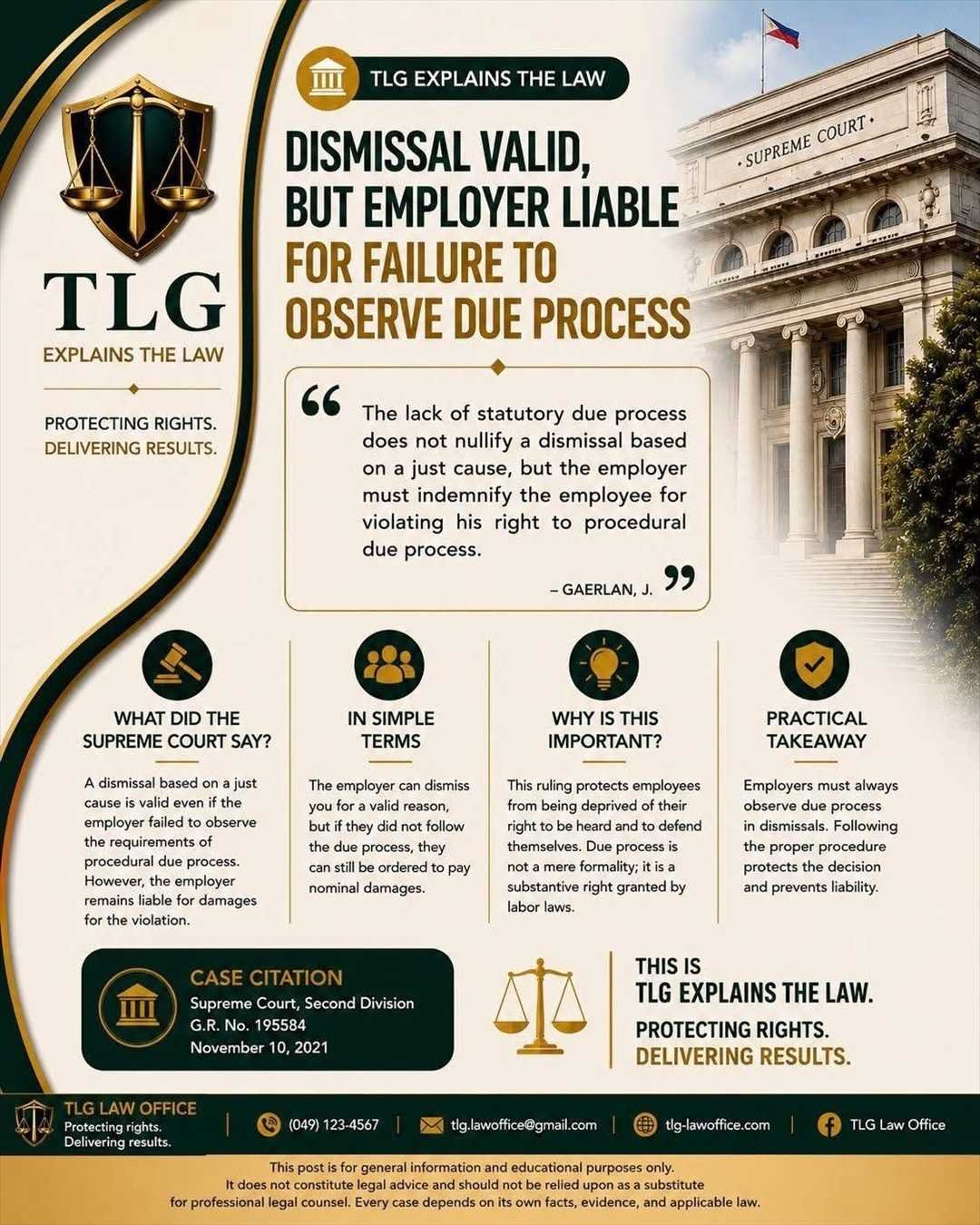
The Supreme Court held that the lack of statutory due process does not nullify a dismissal based on a just cause — but the employer must indemnify the employee for violating the right to procedural due process.
“The lack of statutory due process does not nullify a dismissal based on a just cause, but the employer must indemnify the employee for violating his right to procedural due process.”
— Gaerlan, J.
What Did the Supreme Court Decide?
A dismissal based on a just cause is valid even if the employer failed to observe the requirements of procedural due process. However, the employer remains liable for damages for the violation.
In Simple Terms
The employer can dismiss you for a valid reason, but if they did not follow due process, they can still be ordered to pay nominal damages.
Why Is This Important?
This ruling protects employees from being deprived of their right to be heard and to defend themselves. Due process is not a mere formality; it is a substantive right granted by labor laws.
Practical Takeaway
Employers must always observe due process in dismissals. Following the proper procedure protects the decision and prevents liability.
Case Citation
Supreme Court, Second Division
G.R. No. 195584
November 10, 2021
How TLG Can Help
Employers: we can help you put the right notices and procedures in place before a dismissal. Employees: if you were dismissed without being heard, we can review whether you are entitled to damages or other relief.
Learn about our Labor & Employment practice →