

TLG Explains the Law
Supreme Court Rulings, Explained Simply
Short, plain-language explainers of recent Supreme Court decisions — what the Court said, what it means for you, and the practical takeaway.
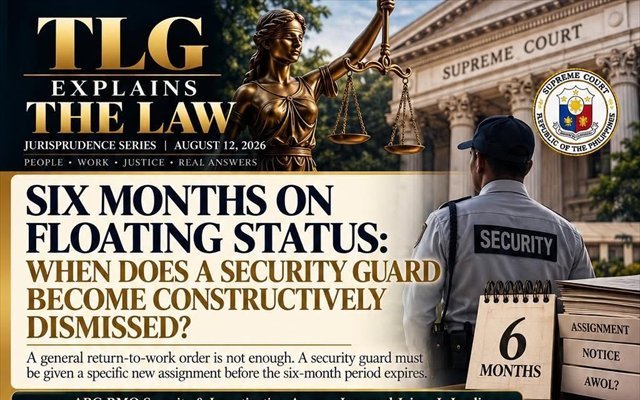
Six Months on Floating Status: When Does a Security Guard Become Constructively Dismissed?
A general return-to-work order is not enough. A security guard must be given a specific new assignment before the six-month floating period expires.
Read the explainer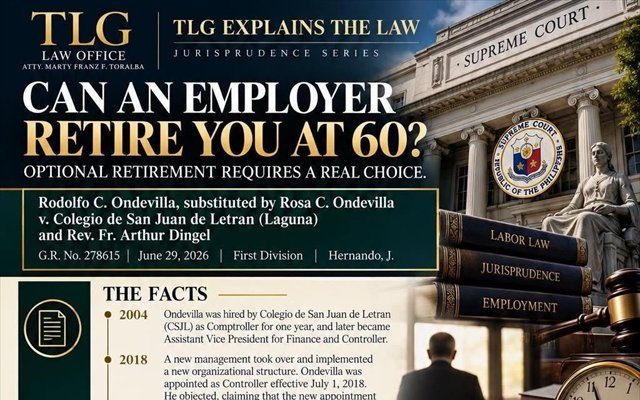
Can an Employer Retire You at 60? Optional Retirement Requires a Real Choice
Turning 60 gives an employee the option to retire — it does not mean the employee has chosen to retire. Optional retirement must be clear and voluntary.
Read the explainer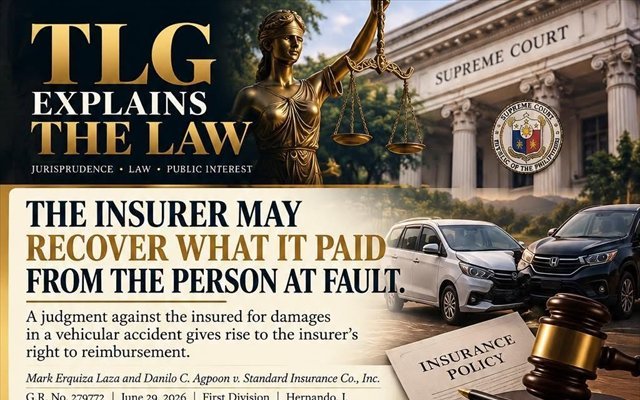
The Insurer May Recover What It Paid From the Person at Fault
When an insurer pays for damage caused by someone else's fault, it steps into the insured's shoes and may recover the amount from the person at fault.
Read the explainer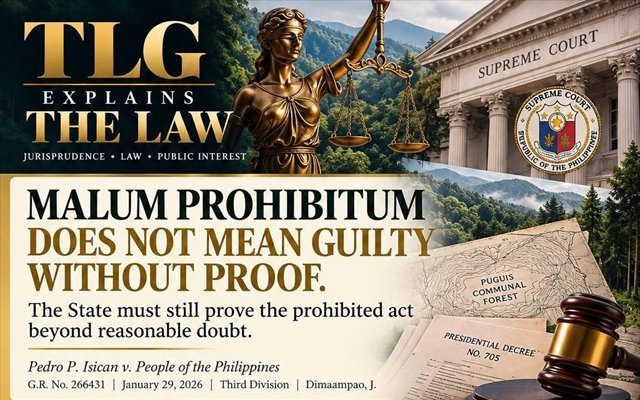
Malum Prohibitum Does Not Mean Guilty Without Proof
Even for malum prohibitum offenses, the State must still prove beyond reasonable doubt that the accused voluntarily committed the prohibited act.
Read the explainer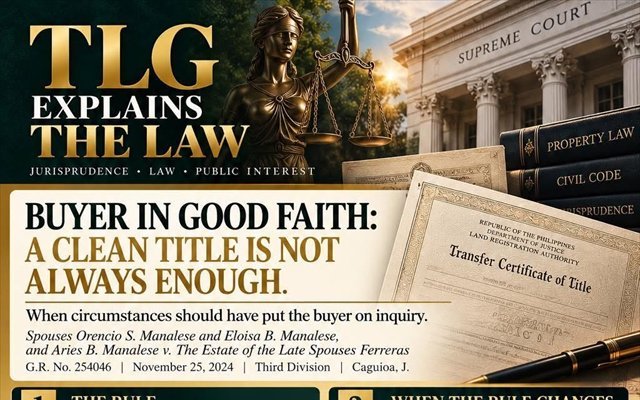
Buyer in Good Faith: A Clean Title Is Not Always Enough
When circumstances should have put a buyer on inquiry, relying on a clean title alone does not make the buyer one in good faith.
Read the explainer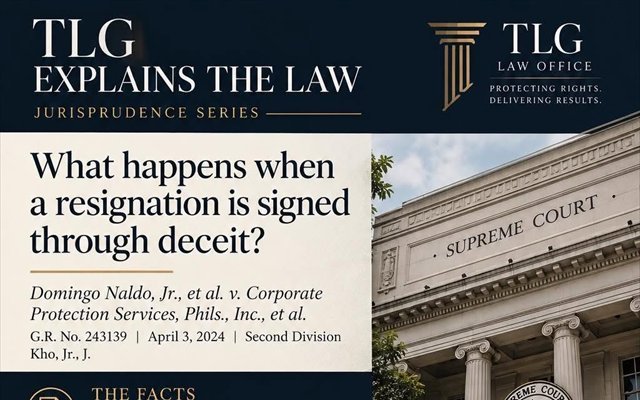
What Happens When a Resignation Is Signed Through Deceit?
Resignation letters and quitclaims obtained through deceit and false promises do not prove a voluntary resignation — the employees were constructively dismissed.
Read the explainer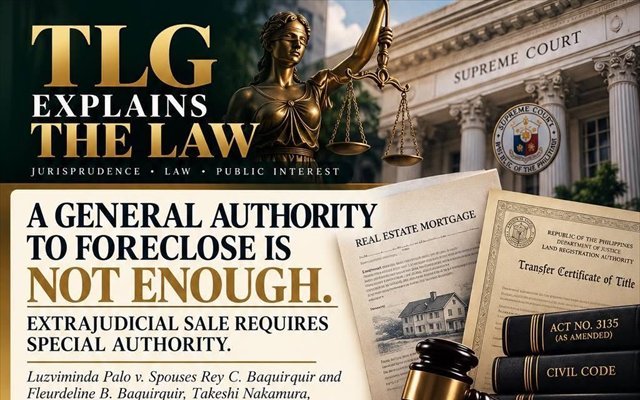
A General Authority to Foreclose Is Not Enough: Extrajudicial Sale Requires Special Authority
A mortgage clause allowing foreclosure is not the same as a special power to sell. Without it, an extrajudicial sale and the resulting title can be nullified.
Read the explainer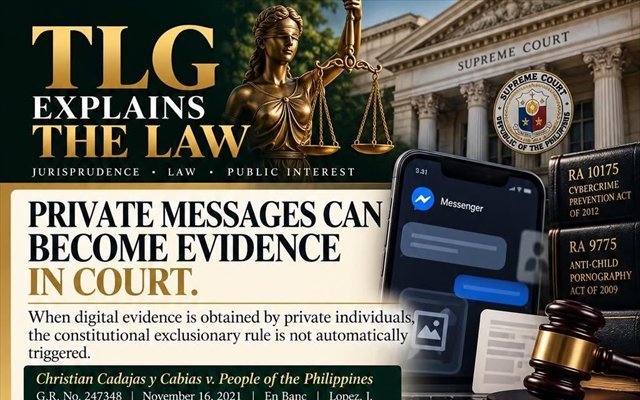
Private Messages Can Become Evidence in Court
When digital evidence is obtained by private individuals, the constitutional exclusionary rule is not automatically triggered.
Read the explainer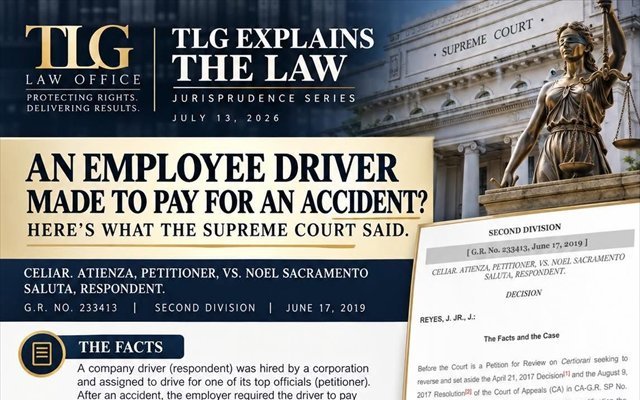
An Employee Driver Made to Pay for an Accident? Here's What the Supreme Court Said
An employer cannot charge an employee for vehicle damage from an accident without a showing of bad faith, willful negligence, or gross negligence.
Read the explainer
Surrender of Title Cannot Defeat Ownership Rights
The State cannot unilaterally divest a private owner of registered land without due process and legal basis.
Read the explainer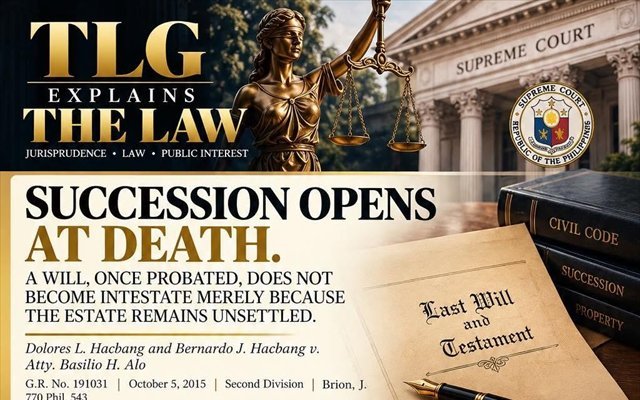
Succession Opens at Death: A Probated Will Does Not Become Intestate Because the Estate Is Unsettled
Successional rights are transmitted from the moment of death. A specific devise in a probated will takes effect even without a final decree of distribution.
Read the explainer
You Posted It Online. Does That Mean You Gave Up Your Right to Privacy? Not Necessarily
Information existing online does not automatically mean you gave up every claim to privacy. Access is not the same as authority to copy, circulate, or publish.
Read the explainer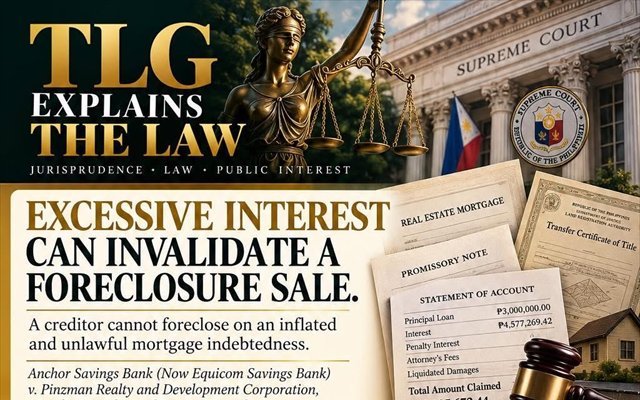
Excessive Interest Can Invalidate a Foreclosure Sale
A creditor cannot foreclose on an inflated and unlawful mortgage indebtedness. The correct amount of the debt must first be established.
Read the explainer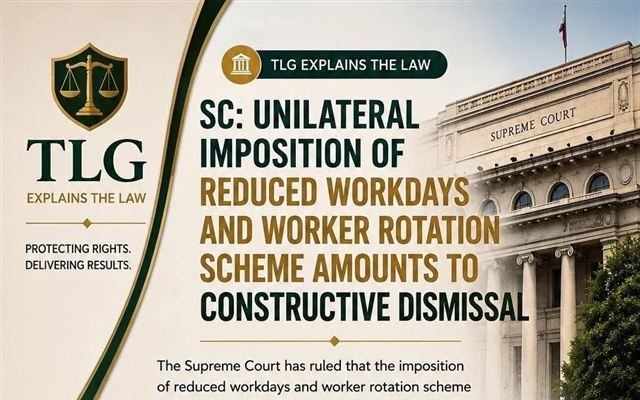
Reduced Workdays and Worker Rotation Without Consent Amount to Constructive Dismissal
An employer that unilaterally cuts workdays or imposes a rotation scheme without the workers' consent may be liable for constructive dismissal.
Read the explainer
Absence Alone Is Not Proof of Abandonment of Employment
Missing work does not automatically mean an employee abandoned the job. The employer must prove a clear intent to sever the relationship.
Read the explainer
Denial of Financial Support Alone Is Not VAWC
Under RA 9262, non-support becomes a crime only when it is willfully used to control or restrict the woman — not mere failure or inability to pay.
Read the explainer
Dismissal Valid, but Employer Liable for Failure to Observe Due Process
A dismissal for just cause stands even without proper procedure — but the employer must still pay nominal damages for violating due process.
Read the explainer
Declaring a Position as Redundant Is Not Enough
Redundancy is a management prerogative — but it must be supported by valid, reasonable grounds and real evidence, not just a declaration.
Read the explainer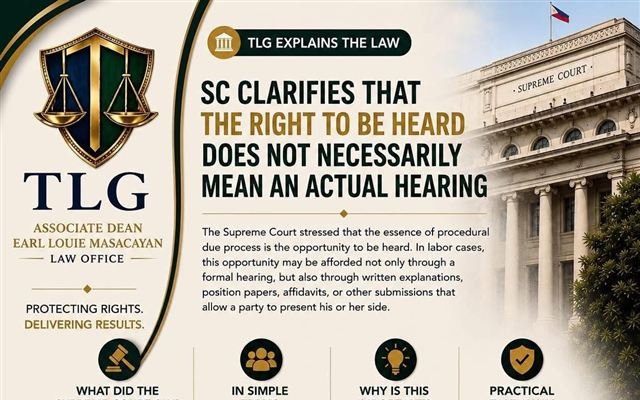
The Right to Be Heard Does Not Necessarily Mean an Actual Hearing
Due process is satisfied when a party has a real opportunity to explain — through position papers, written explanations, or affidavits.
Read the explainer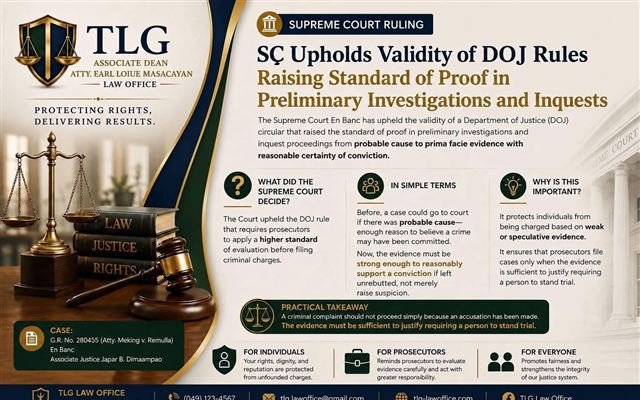
SC Upholds DOJ Rules Raising the Standard of Proof in Preliminary Investigations and Inquests
Prosecutors must now find prima facie evidence with reasonable certainty of conviction — not just probable cause — before filing charges.
Read the explainer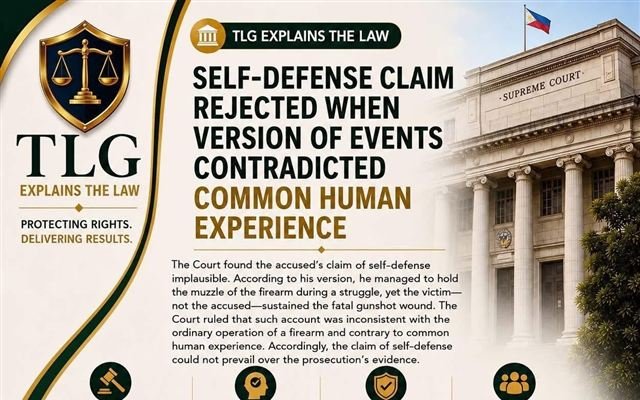
Self-Defense Claim Rejected When the Version of Events Contradicted Common Human Experience
A self-defense claim must be credible and consistent with ordinary experience and the nature of the weapon used — not just the accused's word.
Read the explainer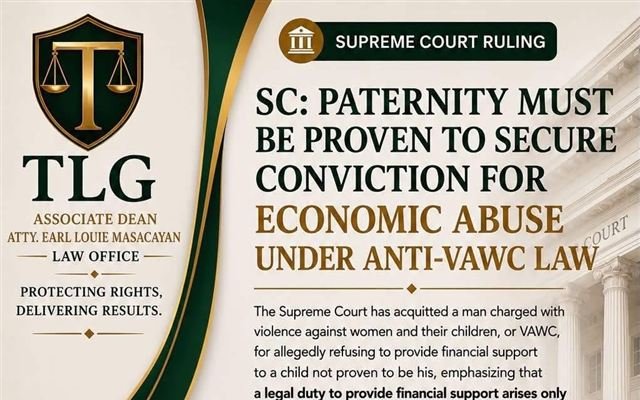
Paternity Must Be Proven to Secure a Conviction for Economic Abuse Under the Anti-VAWC Law
A legal duty to give support arises only after filiation or paternity is established — so there can be no VAWC conviction for non-support without it.
Read the explainer
SC Issues Guidelines on Applying the Child Abuse Law to Lascivious Acts Against Minors
The Court clarified when RA 7610 applies and when acts of lasciviousness against minors remain under the Revised Penal Code.
Read the explainer
SC Clarified Venue Rules for Online Defamation — Even Before the Cyber Libel Law
Before RA 10175, the Supreme Court already guided where an online defamation case may be filed. The doctrine remains relevant today.
Read the explainer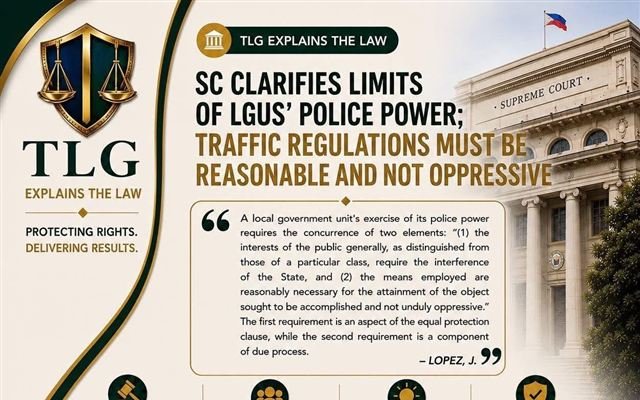
SC Clarifies Limits of LGUs' Police Power: Traffic Regulations Must Be Reasonable and Not Oppressive
Local ordinances are valid only if they serve the public interest and use reasonable means that do not burden people more than necessary.
Read the explainer
Equal Protection Does Not Mean Identical Treatment
Laws may classify people differently, as long as the classification is reasonable, based on real distinctions, and applied equally within the class.
Read the explainerThese articles are for general information and educational purposes only. They do not constitute legal advice and should not be relied upon as a substitute for professional legal counsel. Every case depends on its own facts, evidence, and applicable law.
FAQ
About TLG Explains the Law
How to read and use our Supreme Court explainers.
What is “TLG Explains the Law”?
It is TLG's series of plain-language explainers of Philippine Supreme Court rulings — what the Court decided, what it means in simple terms, why it matters, and the practical takeaway.
Are these articles legal advice?
No. They are for general information and educational purposes only. Every case depends on its own facts, evidence, and applicable law.
Can I rely on a ruling to decide my own case?
Not on its own. How a ruling applies depends on your specific facts and documents. Book a consultation for advice on your situation.
Why do Supreme Court decisions matter if I'm not a party to the case?
Under Article 8 of the Civil Code, judicial decisions applying or interpreting the laws or the Constitution form part of the legal system of the Philippines. Supreme Court rulings guide how courts decide similar cases.
What is a G.R. number?
It is the General Register number — the docket number the Supreme Court assigns to a case. Each article lists the G.R. number where available so you can look up the case.
Where can I read the full text of a decision?
Use the case citation in each article to search the Supreme Court E-Library or the Supreme Court's official website.
What does “En Banc” or “Division” mean?
The Supreme Court decides cases either En Banc (all members sitting together) or in Divisions of five Justices. Each article notes which one decided the case.
What topics does the blog cover?
Labor and employment, property and real estate, civil law (including succession and insurance), criminal law and procedure, family law, and constitutional law, with more topics added over time.
How can I get new explainers as they are published?
Follow our Facebook page at facebook.com/TLGlegalgroup, where new TLG Explains the Law posts are shared.
How do I ask a lawyer about a ruling that affects me?
Book a consultation online or call 09171497406, Monday to Friday, 8:00 AM to 5:00 PM.
Have a question about how a ruling applies to you?
Rulings are general; your situation is specific. Book a consultation and get advice based on your own facts and documents.